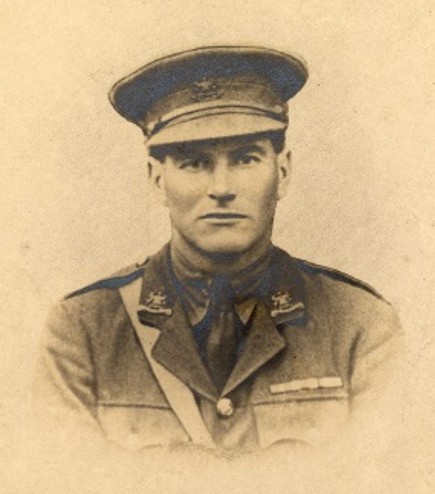
Born just a few miles from Gordon at East Gordon Farm in the Scottish Borders, George Stuart Henderson went on to serve with extraordinary courage during the First World War, earning the Victoria Cross, the Distinguished Service Order and Bar, and the Military Cross.
The Memorial
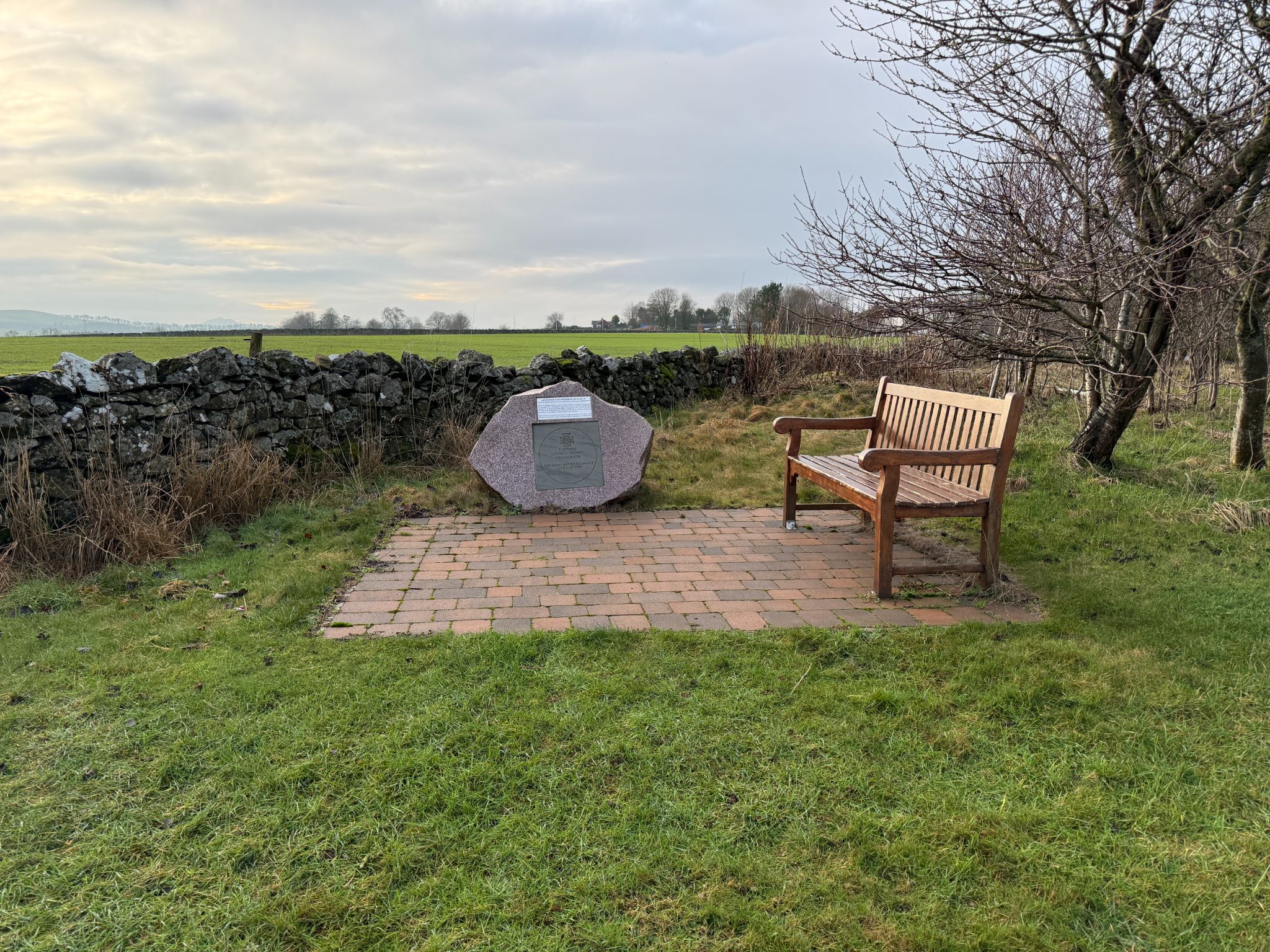
The Henderson Memorial, Gordon Village
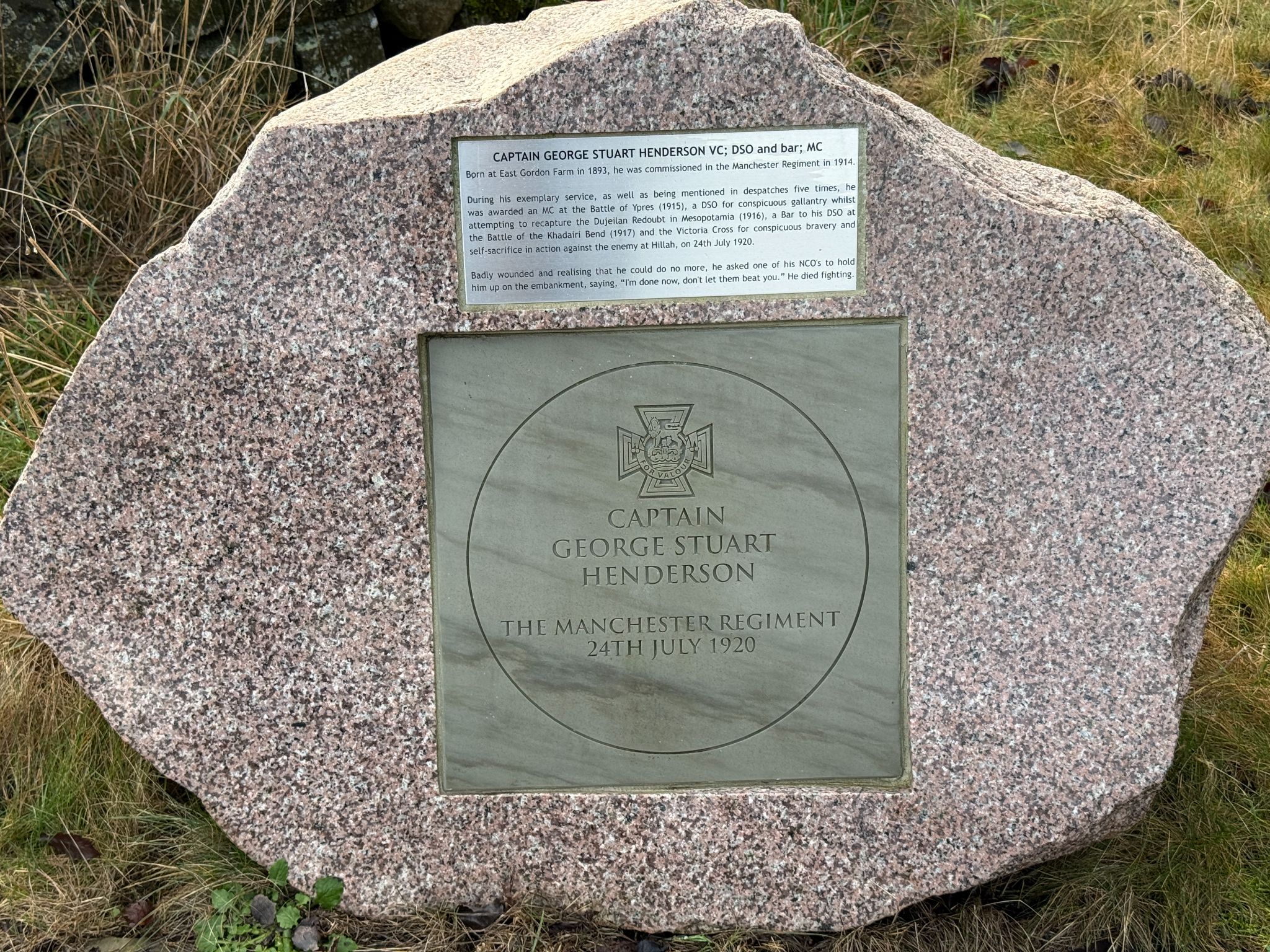
Honours and Awards
- Victoria Cross (VC) — awarded posthumously
- Distinguished Service Order and Bar (DSO & Bar)
- Military Cross (MC)
Early Life
George Stuart Henderson was born at East Gordon Farm in the Scottish Borders. He grew up with his parents Robert and Mary, and his siblings Jessie Agnes and Elspeth. The family were farmers and Presbyterians, and George developed a genuine love of animals and was a natural rider from an early age.
The family later moved to Mount Hooly Farm near Jedburgh. George left home to board at Rossall School near Fleetwood in Lancashire, where he joined the Officer Training Corps and played cricket and football.
Military Service
George was commissioned as a Second Lieutenant in the Manchester Regiment. When war broke out in August his battalion sailed for France. Within weeks they were in combat around Fromelles.
George was wounded in the left arm but returned to the front by Christmas, quickly showing the qualities that would define his service.
George led his company forward under heavy fire. He was awarded the Military Cross.
During an assault on the Dujeilan Redoubt in Mesopotamia, George led bombing parties to clear the position. He was awarded the Distinguished Service Order.
Five of the seven officers in that engagement were killed. George came through unharmed, and was subsequently awarded the Bar to his DSO.
After further service in Baghdad and with a special force called Dunsterforce in Persia, George returned to the Manchester Regiment and served briefly in Ireland before being posted back to Mesopotamia.
On the evening of his last engagement, in the confusion the company split up and began to falter. George rallied his men and led them forward. He did this three times — wounded during one charge, and hit again as his men reached the trench they were making for. He died that night.
It was recognised that without his courage and leadership the attack would have failed. George was awarded the Victoria Cross posthumously. His sister Jessie received it from King George V.
Commemoration
George Henderson’s grave was never found. He is commemorated on the Basra Memorial in Iraq, which bears the names of more than 40,000 members of the Commonwealth forces who died in Mesopotamia and have no known grave.
Records relating to George are preserved in the Tameside Local Studies and Archives Centre, which holds the archive of the Museum of The Manchester Regiment.